
Are Overloaded Electrical Sockets a Fire Risk?
The Ultimate Guide to Overloaded Electrical Sockets
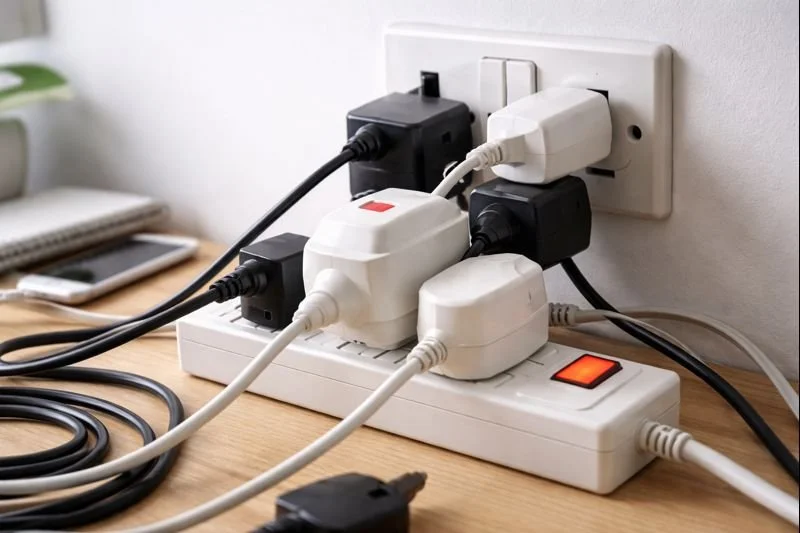
Introduction
Modern homes and offices rely on a greater number of electrical devices than ever before. From laptops and monitors to air fryers, phone chargers, and smart home equipment, it’s easy to run out of plug space quickly. As a result, many people turn to extension leads, adaptors, and multi-socket blocks without giving much thought to the load they’re placing on their electrical system.
Overloaded electrical sockets are one of the most common and most overlooked electrical safety risks in the UK. While they may seem harmless, overloading sockets can lead to overheating, damaged wiring, and in some cases, fires.
This guide explains what overloaded electrical sockets are, why they’re dangerous, how to spot the warning signs, and what you can do to prevent problems in both domestic and office environments.
Table of Contents
1. What does it mean to overload an electrical socket?
An electrical socket becomes overloaded when too much electrical current is drawn through it at the same time. This often happens when multiple appliances are plugged into a single socket using extension leads or adaptors, especially if those appliances require a lot of power.
Every socket, cable, and plug is designed to carry a maximum electrical load. When that limit is exceeded, excess heat is generated. Over time, this heat can damage insulation, weaken connections, and increase the risk of fire.
Importantly, overloading isn’t always obvious. A socket may appear to work normally right up until a fault occurs.
2. Why overloaded sockets are a fire risk
Overloaded sockets are a potential fire risk - this is not a myth!
When electrical components overheat:
Insulation around wires can break down
Plugs and sockets can warp or crack
Loose connections can begin to arc (small electrical sparks)
These conditions significantly increase the likelihood of ignition, particularly where combustible materials such as carpets, furniture, or paper are nearby.
Electrical fires often start slowly and without warning, making overloaded sockets especially dangerous in homes and offices that are unoccupied overnight.
3. Common causes of overloaded electrical sockets
In homes
Plugging high-power appliances (e.g. kettles, microwaves, heaters) into extension leads
Using multi-plug adaptors instead of fixed sockets
Charging multiple devices from one outlet continuously
Older properties with limited socket availability
In offices and workplaces
Desk setups with multiple monitors, computers, and chargers
Daisy-chaining extension leads together
Temporary power solutions becoming permanent
Shared sockets for printers, heaters, and IT equipment
In both environments, overloading often develops gradually as more devices are added over time.
4. Warning signs your sockets may be overloaded
Danger signs to look out for include:
Sockets or plugs feeling warm to the touch
Discolouration or scorch marks around sockets
Buzzing, crackling, or unusual smells
Circuit breakers tripping frequently
Loose plugs that don’t sit securely
If you notice any of these signs, the socket should be considered unsafe until checked.
5. How much load can a socket safely handle?
In the UK, a standard socket is typically rated at 13 amps, which equates to roughly 3,000 watts at 230 volts.
However, this does not mean it’s safe to run appliances right up to this limit continuously, especially through extension leads, which often have lower ratings.
High-power appliances such as:
Kettles
Portable heaters
Microwaves
Tumble dryers
should always be plugged directly into a wall socket and never into an extension lead.
6. How to prevent overloading electrical sockets
Use extension leads responsibly
Choose extension leads with built-in overload protection
Never plug one extension lead into another
Avoid using them for high-power appliances
Spread the load
Distribute appliances across multiple wall sockets
Avoid running several high-power devices at the same time
Install additional sockets
If you regularly run out of plug space, installing additional wall sockets is often the safest long-term solution.
Switch off unused appliances
Even when not actively in use, many devices continue drawing power and contributing to overall load.
Arrange periodic electrical checks
Regular inspections can identify hidden issues before they become serious.
7. Common mistakes to avoid
❌ Assuming “it’s fine because it’s always been like this”
❌ Using cheap, unbranded adaptors
❌ Running heaters from extension leads
❌ Ignoring heat or burning smells
❌ Treating temporary setups as permanent solutions
Avoiding these mistakes can dramatically reduce electrical fire risk.
Conclusion
Overloaded electrical sockets are a genuine safety concern in both homes and workplaces. While modern electrical systems are designed with safety in mind, they still have limits, and exceeding those limits can have serious consequences.
By understanding how socket overloading occurs, recognising the warning signs, and taking practical preventative steps, you can significantly reduce the risk of electrical faults and fires.
If you’re ever unsure about the safety of your electrical setup, speaking to a qualified professional can provide reassurance and help identify safer long-term solutions.
FAQs
-
When a socket is overloaded, excessive current causes heat buildup. Over time, this can damage wiring, weaken connections, and increase fire risk.
-
Spread appliances across multiple sockets, avoid using high-power devices with extension leads, and consider installing additional wall sockets if needed.
-
Yes. Overheating, arcing, and insulation breakdown caused by overloading can all lead to electrical fires.
-
Warm sockets, burning smells, buzzing sounds, scorch marks, and frequently tripping breakers are common warning signs.
-
Most UK sockets are rated at 13 amps (around 3,000 watts), but extension leads and adaptors often have lower limits.