
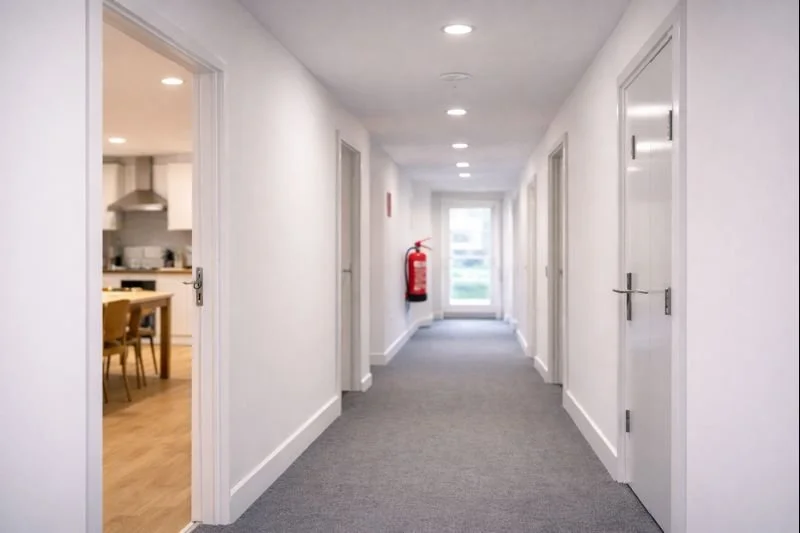
HMO Fire Extinguisher Requirements for Landlords
Fire safety is a legal responsibility for landlords, and this is especially true for Houses in Multiple Occupation (HMOs). Understanding HMO fire extinguisher requirements is essential to protect tenants, meet licensing conditions, and avoid enforcement action.
In most cases, HMOs are expected to have appropriate fire-fighting equipment in place, including fire extinguishers, based on the findings of a fire risk assessment. The exact requirements can vary depending on the property layout, number of occupants, and local authority conditions.
What does the law say about fire extinguishers in HMOs?
Fire safety in HMOs is governed by several pieces of legislation, including the Regulatory Reform (Fire Safety) Order 2005 and the Housing Act 2004. Together, these place responsibility on the landlord or duty holder to ensure reasonable fire precautions are in place.
For HMOs, this typically includes:
Providing suitable fire-fighting equipment where required
Maintaining all equipment in safe working order
Following recommendations made in the fire risk assessment
Meeting any additional conditions set by the local authority as part of HMO licensing
While the law does not mandate fire extinguishers in every single HMO by default, they are commonly required in shared and higher-risk areas.
Fire extinguisher requirements for HMOs
In practice, most HMOs will require fire extinguishers in communal areas, particularly where shared kitchens or escape routes are present.
Typical requirements may include:
Fire extinguishers in communal kitchens, often a water or foam extinguisher for general fire risks
Additional extinguishers in shared corridors or stairwells, depending on layout
Clear signage indicating extinguisher locations
Equipment that complies with BS 5306, the British Standard for fire extinguishers
The exact type, number, and placement of extinguishers should always be determined by a professional fire risk assessment, rather than guesswork.
Do all landlords need to provide fire extinguishers?
For non-HMO rental properties, fire extinguisher requirements are often less strict. Many single-let properties do not require extinguishers if other fire safety measures, such as smoke alarms and fire doors, are sufficient.
However, landlords who manage:
HMOs
Properties with shared facilities
Buildings with multiple escape routes
Properties subject to licensing conditions
…are far more likely to need fire extinguishers installed and maintained.
Local authorities may also impose specific extinguisher requirements as part of licensing or inspection processes.
Who is responsible for fire extinguisher compliance?
Responsibility for fire extinguisher compliance sits firmly with the landlord or managing agent, not the tenants.
This includes:
Ensuring extinguishers are correctly installed
Arranging annual servicing by a competent engineer
Keeping service records up to date
Replacing damaged or non-compliant equipment
Tenants may be asked to report issues, but they are not responsible for maintaining or servicing fire safety equipment.
Servicing and ongoing maintenance requirements
Once fire extinguishers are installed, they must be properly maintained. In almost all cases, this includes:
Annual professional servicing
Routine visual checks to confirm that extinguishers are present and undamaged
Clear service labels and maintenance records
Poorly maintained extinguishers can fail during an emergency and may result in failed inspections or enforcement action during HMO licensing checks.
What happens if HMO fire safety requirements aren’t met?
Failing to meet HMO fire extinguisher requirements can lead to serious consequences, including:
HMO licence conditions being breached
Enforcement notices from the local authority
Invalidated insurance cover
Increased risk to tenant safety
In severe cases, landlords may face fines or restrictions on renting the property.
Fire extinguisher support for HMOs and landlords
GMSE Fire & Security supports landlords, letting agents, and property managers with fire extinguisher supply, installation, and servicing for HMOs and rental properties. We also work alongside fire risk assessments to ensure equipment is appropriate, compliant, and properly maintained.