
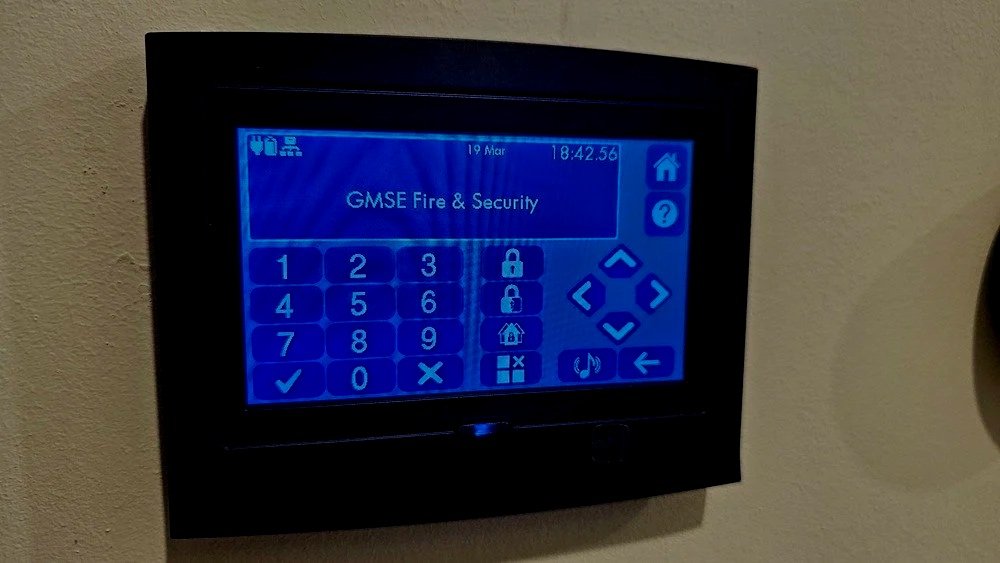
The PSTN Switch-Off: What It Means for Your Alarm
The UK's analogue phone network is being switched off in 2027. If your alarm uses a phone line, it will stop working. Find out if you're affected.
What is the PSTN Switch-Off?
The UK's traditional analogue telephone network — known as the Public Switched Telephone Network (PSTN) - is being permanently switched off by January 2027. BT Openreach is replacing it with a fully digital network, and when the switch happens, any device that relies on the old phone line to communicate will stop working.
For most people this means their landline telephone. But for many homeowners and businesses, it also means their alarm system.
The deadline is January 2027. That may sound a long way off, but engineers across the country are already busy with upgrades. Acting now means you choose your timing — waiting risks a rush and potential gaps in your protection.
Is Your Alarm Affected?
Your alarm is likely affected if any of the following apply:
🔶 Your alarm system was installed more than five years ago
🔶Your alarm uses a telephone line to contact a monitoring centre
🔶You have a landline telephone connection at the same property as your alarm
🔶Your alarm communicator is described as a PSTN, PSTN/ISDN, or speech dialler
🔶You have not been contacted by your current alarm provider about an upgrade
🔶Your alarm monitoring contract references a telephone line or BT line
If any of the above apply, your alarm communicator will stop working when the PSTN network is switched off. The good news is that upgrading is straightforward - and GMSE can assess and upgrade your system quickly.
What Happens If You Don't Upgrade?
When the PSTN network is switched off in January 2027, any alarm communicator that relies on the old phone line will simply stop being able to dial out. This means:
-
Your Monitoring Centre Won't Be Alerted
If your alarm activates, the communicator will attempt to contact the monitoring centre via the phone line — and fail. No alert will be raised, and no response will be sent.
-
Your Insurance May Be Invalidated
Many home and business insurance policies require a working monitored alarm system as a condition of cover. A non-functioning communicator could invalidate your policy — leaving you unprotected at exactly the wrong moment.
-
You Won't Know Until It's Too Late
The alarm panel itself may still appear to function normally; sirens, lights, and local alerts may still work. But the communication link to your monitoring centre will be silent. The only way to know is to test it or upgrade proactively.
Your Upgrade Options
The good news is that upgrading your alarm communicator is straightforward and doesn't necessarily mean replacing your entire system. There are three main paths depending on your current setup:
-
IP Communicator Upgrade
Replace just the communicator module in your existing alarm panel with an IP-based unit. Your alarm stays in place — only the part that dials out is changed. The most cost-effective solution for most modern alarm panels.
Best for:
Existing alarm panels less than 10 years old
Premises with a reliable broadband connection
Those wanting minimal disruption and cost
MOST POPULAR
-
4G Communicator Upgrade
Replace the communicator with a 4G mobile network unit. No reliance on broadband — ideal for rural properties or premises where internet connectivity is unreliable.
Best for:
Rural properties with poor broadband
Sites where broadband outages are a concern
Businesses requiring maximum communication resilience
-
Full System Replacement
If your alarm panel is old, no longer supported, or due for an upgrade anyway, a full system replacement may be the most sensible long-term investment.
Best for:
Alarm systems over 10 years old
Systems that no longer meet current insurance requirements
Those wanting to upgrade to a smart, app-controlled system
How GMSE Fire & Security Can Help
Upgrading your alarm communicator is simpler than you might think — and GMSE can handle the entire process from assessment through to testing and certification.

Free Assessment
We visit your property, identify your current communicator type, and confirm which upgrade path is right for your system.

Upgrade Recommendation
We explain your options clearly — IP, 4G, or full replacement — with honest advice on the most cost-effective solution for your setup.

Upgrade & Installation
Our engineers carry out the upgrade cleanly and efficiently, with minimal disruption to your premises.

Test & Certify
We test the new communicator end-to-end, confirm monitoring centre connectivity, and provide a completion certificate for your records.
Why Act Now - Not Later?
January 2027 is the confirmed deadline for the PSTN switch-off. While that may feel like plenty of time, there are good reasons to act sooner rather than later.
-

Engineer Availability
As 2027 approaches, demand for PSTN upgrade engineers will increase significantly. Businesses and homeowners who leave it late may face longer waiting times and potentially higher costs.
-

Avoid Gaps in Protection
Scheduling an upgrade on your terms means your alarm system remains fully operational throughout the transition. Leaving it to the last minute risks a period where your system is non-functional.
-

Insurance Compliance
Some insurers are already asking for confirmation that monitored alarm systems are PSTN-ready. Getting ahead of the deadline demonstrates due diligence and keeps your cover intact.
Frequently Asked Questions
-
BT and other telephone service providers are modernising the landline network, known as the Public Switched Telephone Network (PSTN), switching from analogue to digital or Internet Protocol (IP). The outdated copper telephone lines are being replaced with fibre optic ones, and digital technology known as Voice over Internet Protocol (VoIP) will facilitate landline calls via broadband.
The change is driven by a growing demand for faster networks and connectivity, compounded by the increasing difficulty and expense of maintaining the PSTN.
-
The confirmed deadline is January 2027. BT Openreach is switching off the analogue phone network nationwide, and all PSTN-dependent devices — including alarm communicators — will stop functioning at that point.
-
For most modern alarm panels, an IP communicator upgrade is the most cost-effective solution. This replaces only the communicator module — the part that dials out — leaving the rest of your alarm system in place. A full system replacement is only necessary if your panel is old or no longer supported.
-
Yes — once upgraded to an IP or 4G communicator, your alarm will connect to the monitoring centre via broadband or mobile network instead of the phone line. Monitoring continues uninterrupted and in many cases with faster, more reliable connectivity than the old PSTN connection.
Don't Wait Until 2027 — Get Assessed Now
Our engineers cover Kent, London & East Sussex. We'll visit your property, assess your current alarm communicator, and recommend the most cost-effective upgrade path — with no obligation to proceed.